
How a Global Shipowner Reduced Operational Costs by Up to 40%
In today’s highly competitive maritime industry, shipping companies are under increasing pressure to optimize operations while managing rising costs and complex global demands. Challenges such as fragmented processes, limited scalability, and inefficient workflows continue to impact overall performance and profitability.
One global shipowner faced these exact challenges. With operations spanning multiple regions, the company struggled to maintain efficiency while keeping costs under control. As demand grew, so did the complexity of their operations—highlighting the need for a more agile and sustainable approach.
The Challenge
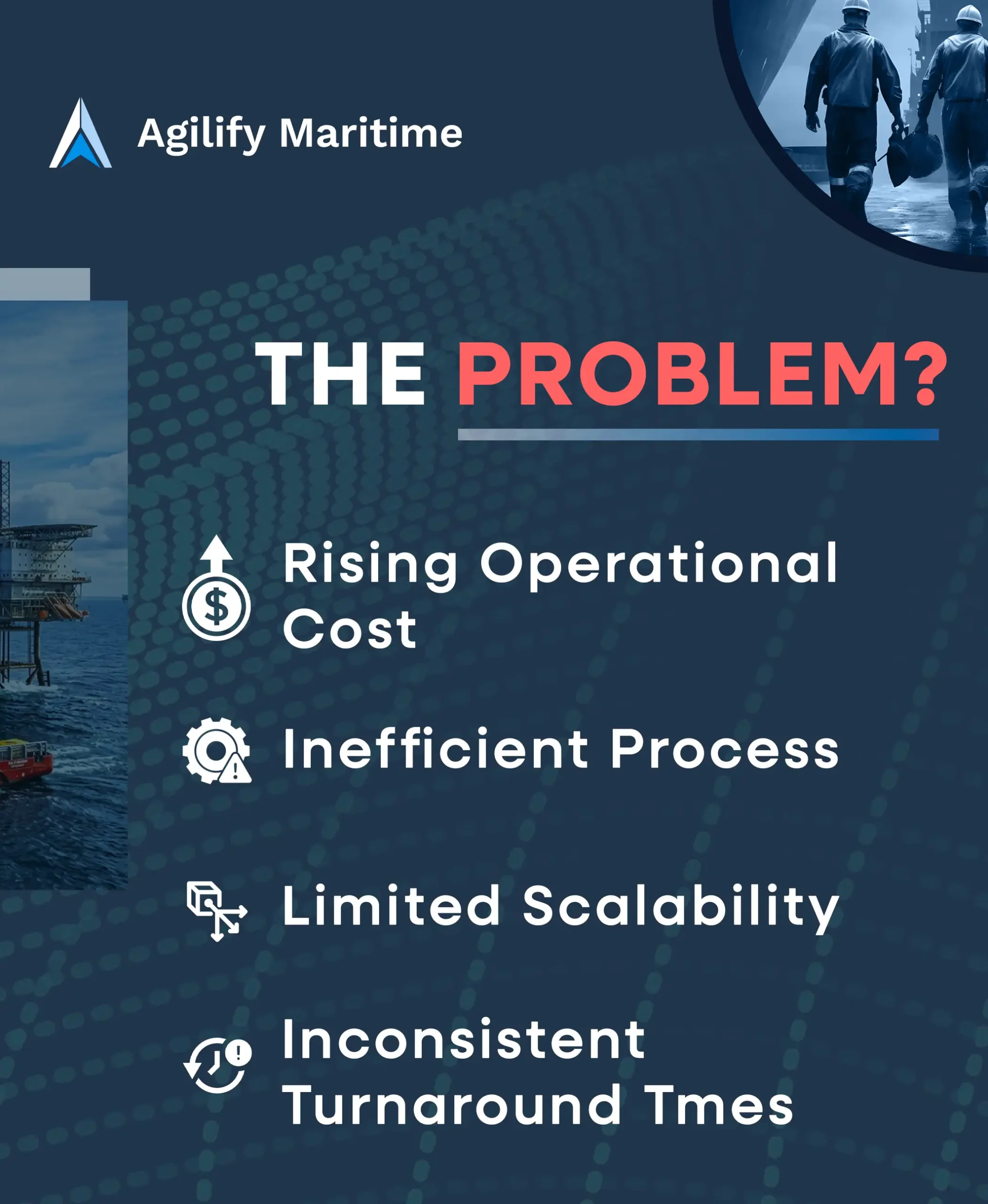
The organization encountered several operational hurdles that hindered performance and growth. High overhead costs associated with maintaining onshore teams significantly impacted their cost structure. At the same time, reliance on manual and inefficient back-office processes resulted in delays, increased risk of errors, and limited visibility across operations.
Additionally, the company faced constraints in scaling its workforce quickly to meet fluctuating demands. Inconsistent turnaround times further affected service reliability, making it difficult to maintain a competitive edge in a fast-paced industry.
The Solution
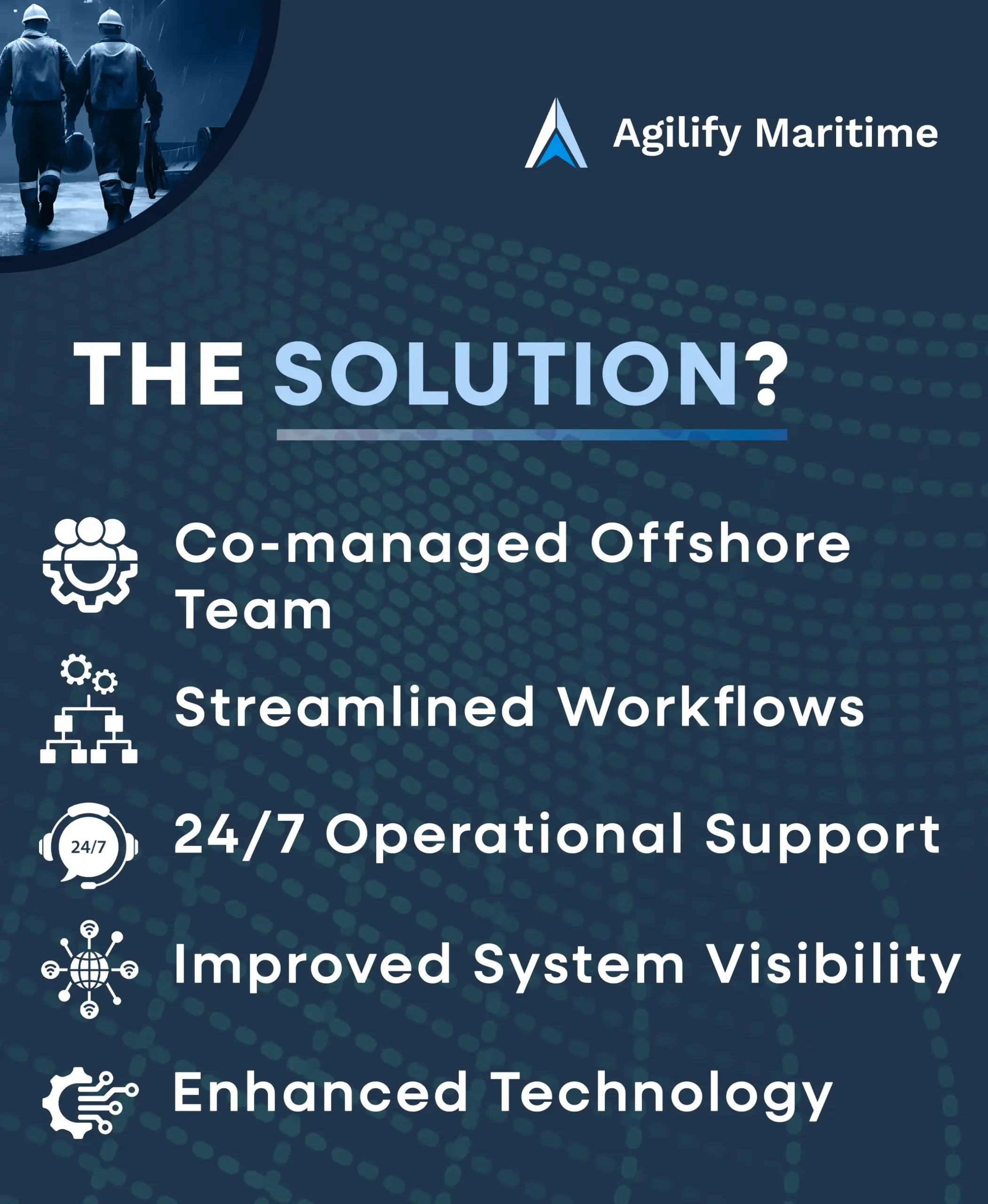
To address these challenges, the company adopted a co-managed offshore team model—a strategic approach that combines dedicated offshore support with direct operational control.
Through this model, the company established a highly skilled offshore team that seamlessly integrated with its existing operations. Workflows were standardized and optimized to eliminate inefficiencies, while digital tools and system integration enhanced visibility and coordination across functions.
The introduction of 24/7 operational support across multiple time zones ensured continuous productivity, faster response times, and improved service delivery. This approach not only streamlined day-to-day processes but also created a more flexible and scalable operational framework.
The Results
The transformation delivered measurable and impactful results across the organization:
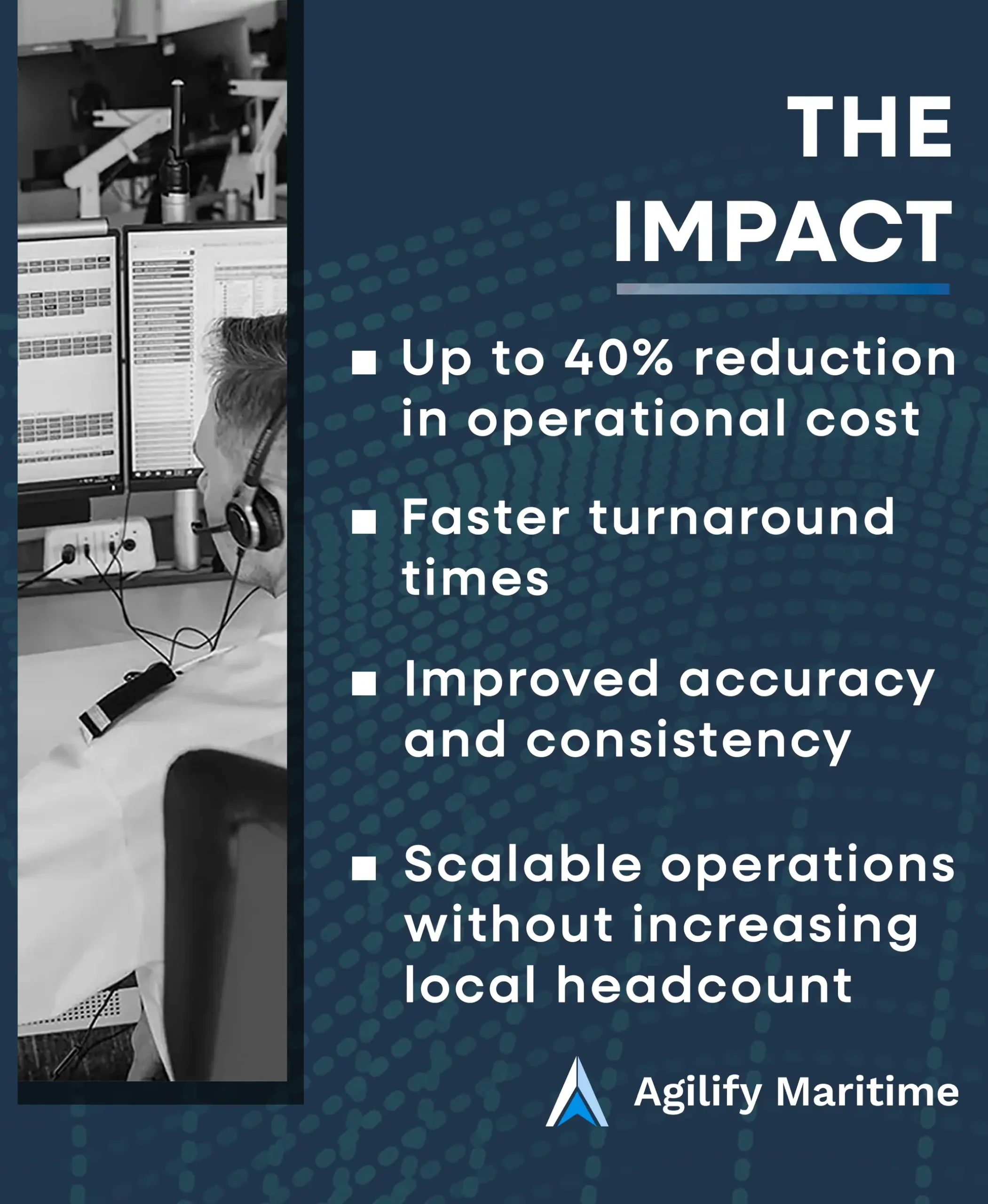
- Up to 40% reduction in operational costs, significantly improving overall profitability
- Faster turnaround times, enabling more efficient service delivery
- Improved accuracy and consistency, reducing errors and enhancing process reliability
- Scalable operations, allowing the company to expand without increasing local headcount
Conclusion
This case demonstrates that cost optimization in maritime operations goes beyond simple cost-cutting measures. By adopting innovative operating models such as co-managed offshore teams, companies can unlock greater efficiency, improve service quality, and build a more agile and scalable organization.
As the maritime industry continues to evolve, organizations that embrace smarter, technology-enabled solutions will be better positioned to navigate challenges and drive sustainable growth.